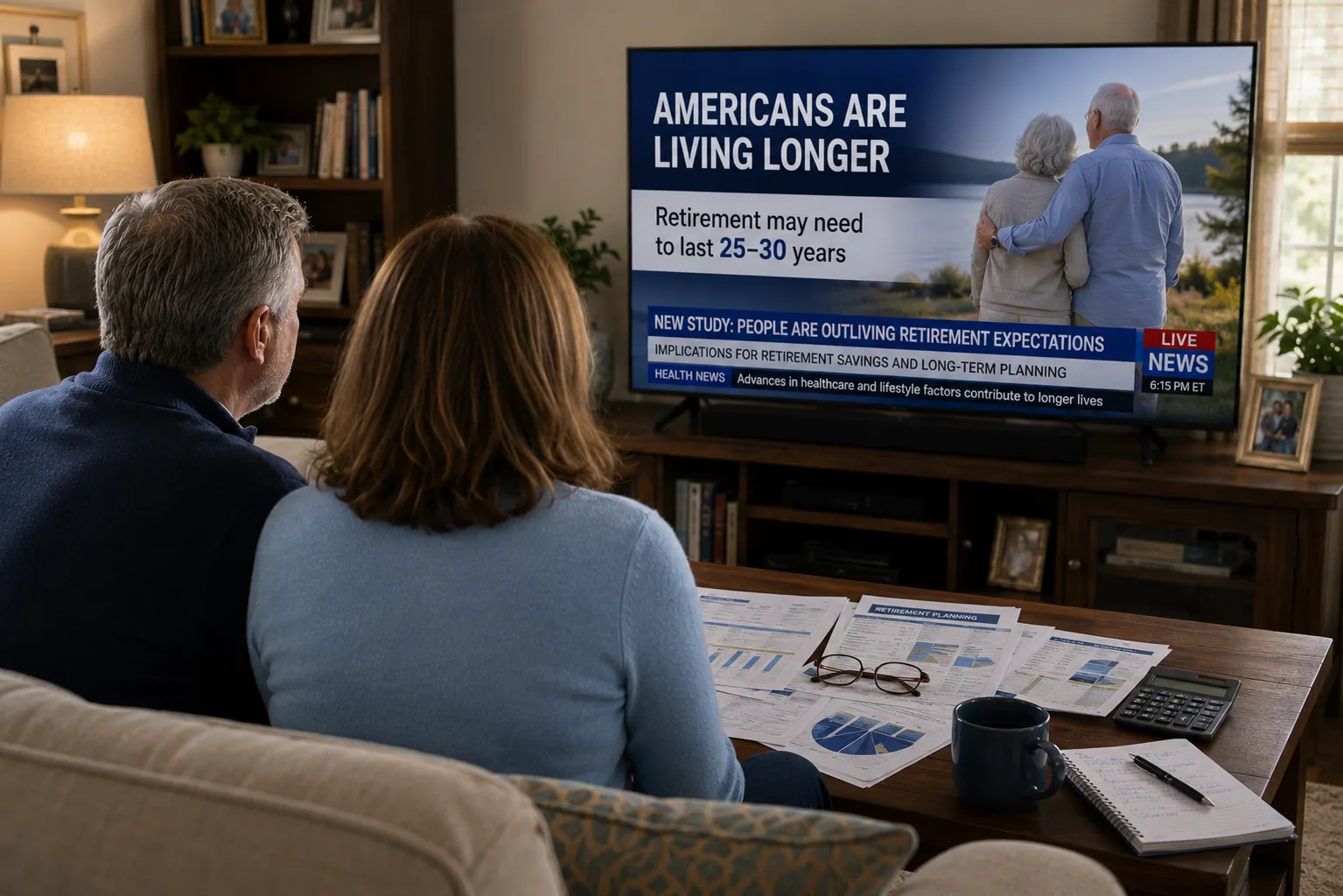
Imagine a couple retiring at 65. They have savings, a home, Social Security benefits, and a portfolio they expect to draw from each year. Their retirement plan assumes they'll both live into their mid-80s, much like their parents did.
Now fast-forward 30 years.
One spouse is still living independently in their 90s. Healthcare expenses have climbed, inflation has steadily chipped away at purchasing power, the house suddenly needs major repairs, and the investment portfolio is recovering from a difficult market.
This is where a retirement portfolio gets tested.
The balance on the day you retire can't be predicted with certainty, as it depends on how long your retirement will last. What matters is whether your portfolio can continue to produce income over decades of withdrawals, inflation, market cycles, and life's inevitable surprises.
A portfolio expected to provide income for 20 years faces a very different challenge than one that may need to last 30. Every additional year extends the withdrawal schedule, gives inflation more time to erode purchasing power, creates more opportunities for market downturns to coincide with income needs, and increases the likelihood that healthcare costs will become a larger part of the budget.
So why not just plan for a much longer retirement? Well, if you build a plan assuming you'll live to 95 but retirement lasts only 20 years, you may spend less than you comfortably could have.
That's why it often makes sense to plan using a range of outcomes rather than a single life expectancy estimate.
Inflation
A couple may retire with a budget that feels comfortable in year one. They know the mortgage or rent, insurance premiums, grocery bill, utility costs, travel plans, and tax estimates. But ten or fifteen years later, the same lifestyle can require a very different income number.
As of the May 2026 Consumer Price Index release, the all-items CPI-U rose 4.2% over the prior 12 months. Food rose 3.1%, shelter rose 3.4%, and medical care rose 2.6% over that same period.2
Perhaps surprisingly, this is where being safe and conservative with your investments can lead to issues later on. For example, cash and very conservative assets can feel safe because the account balance does not move much from day to day. But if the portfolio stays too conservative for too long, inflation can significantly reduce what those dollars can buy. The account statement looks stable while the grocery cart, insurance bill, property tax notice, and healthcare premiums tell a different story.

Inflation illustration
What could the same lifestyle cost later?
A static example showing how rising prices can change the income a portfolio may need to support over a long retirement.
Estimated annual spending needed to maintain purchasing power
Hypothetical illustration for educational purposes only. It does not reflect investment returns, taxes, portfolio fees, changes in spending behavior, or future inflation data.
Some retirees can maintain a more conservative mix than others because pensions, Social Security, annuity income, cash reserves, or lower spending needs reduce pressure on their portfolios. Others may need more growth exposure than they expected. The right mix should be reviewed over a long spending horizon, with some dollars available for near-term withdrawals and others positioned for future income needs.
Withdrawal Rates
Morningstar's 2026 retirement income research estimates a 3.9% starting withdrawal rate for retirees seeking consistent inflation-adjusted spending over a 30-year period, with a 90% probability of having funds remaining at the end of that period.3 The figure is a research estimate built on assumptions about market returns, inflation, asset allocation, life expectancy, and spending consistency.
Your own withdrawal rate depends on your personal assumptions, not those that were discovered in research. How much of your spending is covered by Social Security, pensions, annuities, rental income, or business transition income? How much spending is essential, and how much can flex after a weak market year? How much of your portfolio sits in taxable, tax-deferred, and Roth accounts? How much risk is concentrated in one company, sector, property, or tax bucket?
Withdrawal rate reality check
What does the portfolio need to cover?
A static example showing how income sources, spending flexibility, and account mix can change the starting withdrawal rate.
Hypothetical illustration for educational purposes only. It does not reflect investment returns, taxes, portfolio fees, required minimum distributions, changes in future income, or individual planning recommendations.
A 4% withdrawal might be too high for one household and unnecessarily restrictive for another. The number becomes more useful after it is tested against the household's real income sources, tax picture, healthcare exposure, spending flexibility, and desired legacy.
Before retirement, risk is partly about protecting the transition from paycheck income to portfolio withdrawals. Once retirement begins, the next question is whether the income plan can keep working through the years that follow.
Allocate Each Dollar
Different dollars need different assignments.
A bucket-style framework can help match the timing of each spending need with the role of the investment dollars. Near-term withdrawals may call for a reserve that is easier to access and less exposed to market swings. The next several years may need assets focused on stability and income support. Dollars earmarked for later retirement may need more growth potential, so the plan is not left relying only on assets chosen for short-term comfort.
The goal is to assign risk deliberately. If every dollar is invested for growth, the household may be forced to sell during a downturn. If every dollar is parked for stability, the plan may lose purchasing power over time. A long retirement often requires both defense and offense, with each part of the portfolio given a clear purpose.
Retirement income buckets work best when they are tied to actual expenses, tax planning, and a process for refilling near-term reserves after markets recover.
Healthcare in Late Retirement
A household accustomed to employer coverage and payroll deductions has to establish a new rhythm in retirement as premiums, prescriptions, dental work, vision care, hearing aids, deductibles, and out-of-pocket bills can all hit the budget at different times and different household economic cycles.
Fidelity's 2025 retiree healthcare estimate says an average 65-year-old couple may need about $345,000 after tax to cover healthcare costs in retirement, excluding long-term care. A single person may need about $172,500.4
Healthcare costs can affect the portfolio in several concrete ways. Medicare premiums and out-of-pocket costs can raise fixed spending. A large medical expense can create a withdrawal need in a bad market year. Long-term care, if (likely) needed, can further change the plan. Higher income in a given year can also interact with Medicare premium brackets, which is why tax planning and healthcare planning should not be reviewed in isolation.
Portfolio Flexibility
Markets will have strong years and weak years. Inflation will rise and fall. Spending needs will change. Family needs may change as well.
One way to handle that uncertainty is to set withdrawal guardrails before retirement begins. Under a dynamic spending approach, withdrawals can adjust based on portfolio performance: retirees may spend a little more after strong years and tighten discretionary spending after weak years, within limits set in advance.5
Set the adjustment rules before the market tests them
This approach can be easier when the household separates essential spending from flexible spending. Essential spending includes housing, food, utilities, insurance, healthcare, taxes, and other required costs. Flexible spending may include travel, gifts, home projects, hobbies, or larger discretionary purchases.
If essential spending is mostly covered by Social Security, pension income, annuity income, or a conservative withdrawal plan, the portfolio has more room to adapt. If essential spending depends heavily on selling growth assets every year, the plan may be more exposed to market timing.
Flexibility works best when the rules are set before emotions run high. If the portfolio drops, what spending can be paused? Which account funds the next withdrawal? How will the portfolio be rebalanced? When will the plan be reviewed again? Those decisions are much easier to make before a difficult market year arrives.
The Surviving Spouse Scenario
A retirement plan for a couple should be tested in two phases. The first is while both spouses are alive. The second is after one spouse is left to manage the household alone.
It's common for couples to build a retirement plan around two people, but at some point that plan may need to support just one. When that happens, the financial picture can shift quickly. One Social Security benefit may disappear, a pension survivor benefit could be smaller than the original payment depending on the election made at retirement, and filing taxes as a single taxpayer may result in a larger tax bill. Yet many of the household bills keep showing up every month. The mortgage may be gone, but property taxes, insurance, utilities, home maintenance, and healthcare costs don't simply fade away.
There's another side to this that doesn't show up on a spreadsheet.
In many households, one spouse naturally takes the lead on investments, taxes, and retirement income. If that person passes away first, the surviving spouse may suddenly find themselves responsible for accounts, withdrawal decisions, tax paperwork, and investment choices they've never had to manage before.
If one spouse spends another ten or fifteen years managing retirement alone, will the income plan still be easy to understand, straightforward to manage, and flexible enough to adapt as life changes?
What to Review
A household with strong guaranteed fixed income may have more flexibility with portfolio withdrawals. A household with heavy tax-deferred savings may need more tax planning before required minimum distributions begin. A household with concentrated investments may need to review whether one company, sector, property, or tax bucket is carrying too much of the retirement plan.
That is where diversification becomes vital. In retirement, diversification can affect income reliability, tax flexibility, healthcare planning, estate planning, and the ability to stay invested through hard markets.
In Conclusion
A long retirement is a good outcome, but it asks much more from a portfolio. The portfolio has to support more withdrawals, keep up with rising costs, handle healthcare surprises, adapt to market cycles, and still work if one spouse lives much longer than expected. If both survive longer than expected, than even more so!
G&R Financial Solutions can help you review whether your portfolio is built for the retirement timeline you may face, rather than only the retirement date on the calendar. If you are approaching retirement or already drawing from your savings, schedule a time below to review how your income plan, investment mix, taxes, and healthcare assumptions fit together.
Sources
- Social Security Administration, Actuarial Life Table, 2023, as used in the 2026 Trustees Report.
- Bureau of Labor Statistics, Consumer Price Index - May 2026.
- Morningstar, What's a Safe Retirement Withdrawal Rate for 2026?.
- Fidelity, Prepare for health care in retirement.
- Vanguard, Vanguard's Principles for Retirement Income.